

Workforce Development Spotlight: Apprentice Learning
May 5, 2021
MENTOR and American Student Assistance (ASA)’s Workplace Equity Pledge raises awareness about the importance of mentoring to support young people in their career journeys and foster equity in the workplace. As part of the campaign, we’re shining a light on organizations doing innovative and remarkable work in this arena.
Organization Spotlight: Apprentice Learning, Boston, MA
Apprentice Learning is a Boston-based nonprofit that partners with local employers to provide career education for seventh, eighth, and ninth grade Boston public school students. At the heart of the program is the eighth-grade apprenticeship program.
We asked Apprentice Learning Executive Director Helen Russell to share her thoughts about the transformative effect of early career exploration and work-based learning on middle and high school students.
Tell us about Apprentice Learning’s model.
Apprentice Learning currently partners with five public schools and approximately 70 greater-Boston businesses to deliver a school-day career exploration program to more than 300 students each year.
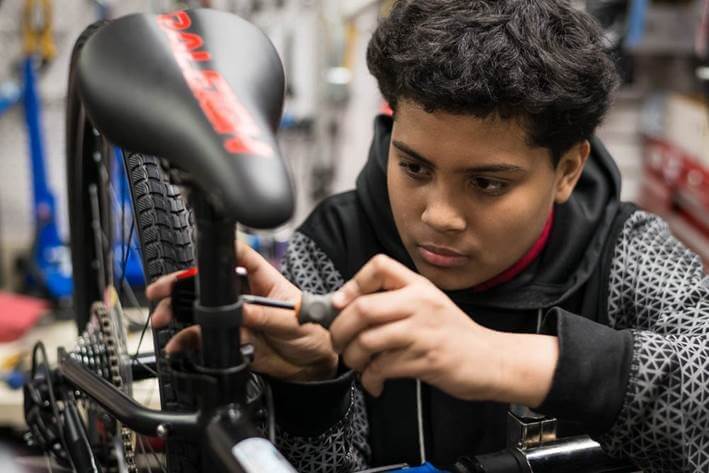
Students are introduced to Apprentice Learning in the seventh grade with introductory experiences that include a career day and classroom-based activities. As eighth graders, they take six weekly career-building classes. They learn how to identify their signature strengths and career interests, practice communication and self-advocacy skills, and write their first résumé. During this time, students select and are matched to an apprenticeship from a list of participating businesses. Weekly over the next six weeks, they travel to a business and work alongside a career mentor for two hours. Our business partners vary across sectors and industries ranging from large IT corporations to local small businesses and retailers. Students gain exposure in myriad workplace settings, including commercial kitchens, pet stores, bike shops, real estate development, and technology companies.
All eighth-grade students in our partner schools are eligible to participate in Apprentice Learning, and we serve the full range of learners. Over the past year, all of our apprenticeships transitioned to virtual experiences.
How does early career education pay off?
Early career education offers proven benefits, especially for those in under-resourced communities. Our partner schools recognize this – they know the value of linking career knowledge and academic success and incorporate the apprenticeship program into the regular academic curriculum.
We reach students when they’re just beginning to explore their strengths and interests. In eighth grade, many students are open and curious about the adult world. They want to work but don’t know how to get a job. We frame all of our apprenticeships as jobs. While students know that they are not getting paid, they do understand they are developing important skills and earning valuable work experience that gives them a competitive edge over their peers.
At this pivotal moment, they’re given an independent workplace experience that taps their interests and skills. Each student is carefully matched to a worksite that offers appropriate challenges and is geared for success – whether it’s learning the art of sharpening skates at the Warrior Ice Arena or exploring cyber security at a high-tech company. The result: 98% of students complete their apprenticeships, expand their horizons, build their networks, and enter high school with increased self-confidence about their ability to succeed in the workplace.
When the program was founded nine years ago, its goal was to improve public high school graduation rates. The high school preparation we give rising ninth grade students is a signature achievement that prepares them with the knowledge that career preparation begins in high school. It also bolsters students’ development and confidence by building a sense of belonging. Most young people have a dream career in mind, but they may not have a plan to get there. If a young person knows as they enter high school that they want to be a lawyer, for example, it helps them to know that they need to like to read, take certain classes, like debate, in high school and that they must attend law school after college.
This is particularly important for the students that Apprentice Learning serves. More than 90% of the participants are students of color, English language learners, and live in under-resourced communities; historically, because of structural barriers, they are less likely to graduate or graduate on time and also face structural barriers to success in the workforce.
How do Apprentice Learning and career mentors support students once they are in the workplace?
Apprentice Learning helps demystify the Boston skyline for young people. Most of the students we serve don’t know the name of a single building in the downtown area. We make it a priority to help all students feel comfortable navigating business spaces. Our staff get to know our students and prepare them to arrive feel confident and gradually build a level of assurance in workplace environments.

At the workplace, our career mentors share the culture and practice of their company. We also invite small businesses in school neighborhoods to host an apprentice. This strengthens the fabric of a community, and it’s not just students who benefit. When businesses sign up with Apprentice Learning, they know they’re also receiving a special opportunity to gain a lens into young peoples’ lives – to understand where they come from, build relationships and bridges across experiences, and make an intentional and personal investment in building a more diverse talent pipeline.
Tell us about some of your success stories.
The first participants in Apprentice Learning are now in their early twenties, and the success of the program is reflected in their education and early career outcomes. One of our first students in the program is someone with learning differences who wanted to work with animals. She apprenticed at a specialty pet food store and had a great experience that inspired her to pursue a two-year degree in animal science at a community college. Her graduation was a significant achievement fueled by her career passions. There are so many stories like hers where an apprenticeship has ignited a sense of purpose. A central theme in all the feedback we receive is the caring adults who made sure each student had an enriching experience every step of the way and brought out their unique skills, talents, and potential.
When students end their apprenticeships, they share reflections with their worksites. A student who was an apprentice at NorthStar Asset Management shared, “I really enjoyed the activity where we invested in different companies and learned about the buying and selling of the stock market…I liked your position as a customer service consultant because you need to have good social skills and I think I’m good with communication.” This type of self-awareness is the kind of feedback we receive regularly from our students.
What does the future hold for Apprentice Learning?
Apprentice Learning’s relationship-centered approach brings together partners who can support the expansion of pre-apprenticeship opportunities for middle school students. With funding from partners like ASA, we’re primed to expand in coming years. In Boston, our goal is to double our reach from five to ten schools and serve more than 500 students.
Looking ahead, it’s exciting to think about the possibilities, about how the Apprentice model could be shared with other communities. Over the past year, all of our apprenticeships were virtual experiences and this offers new possibilities for connecting students to a wide array of career opportunities and knowledge.