
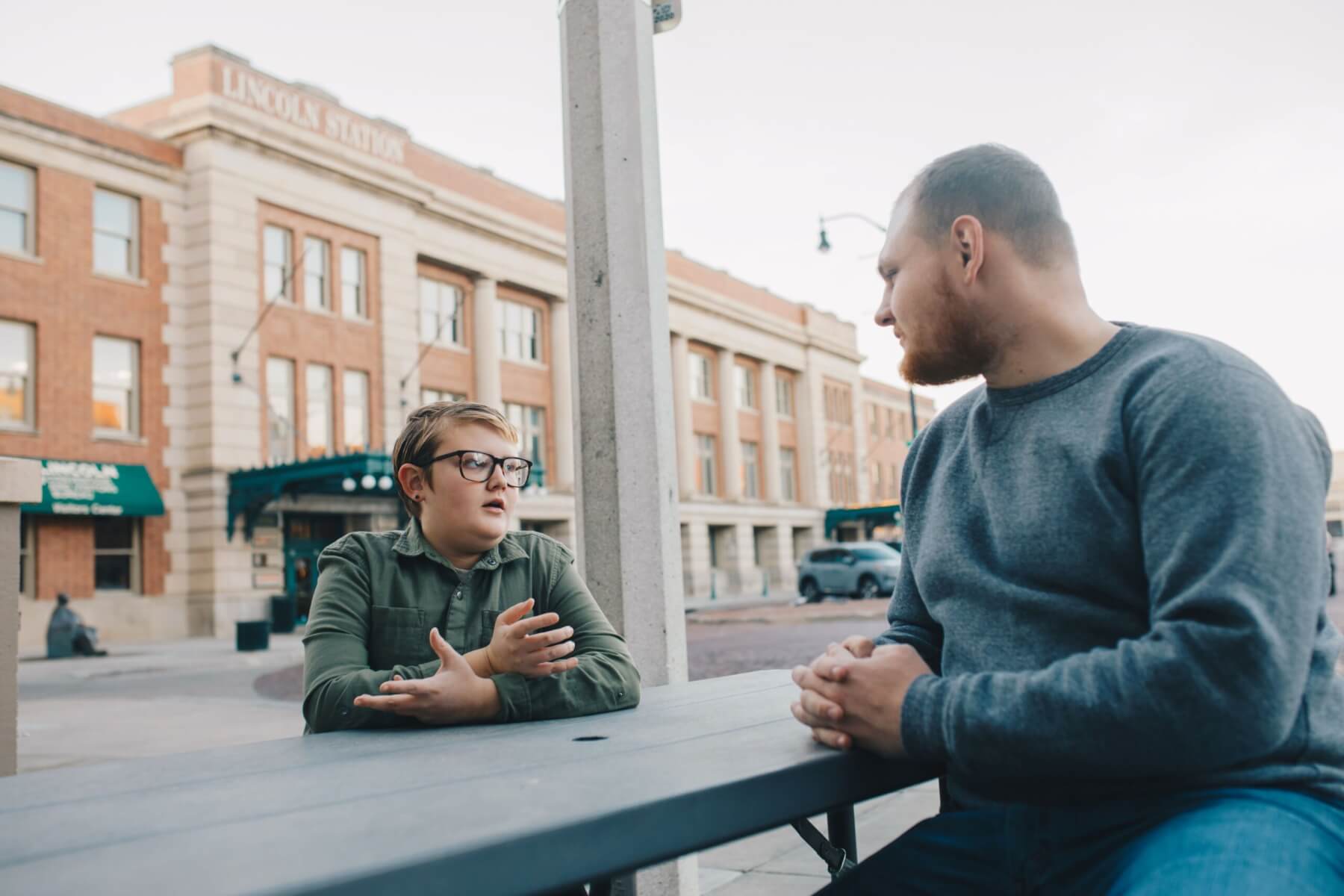

BUILDING A CITY OF LEADERS: WORKPLACE MENTORING IN VIRGINIA
July 28, 2021
Connect Focus Grow, Workforce Development, Our Affiliates
The mentoring movement believes that relationships are powerful agents for change; when individuals feel heard and supported, communities strengthen and equity grows. It is critical that these relationships are centered in a variety of spaces, everywhere from schools to community centers to workplaces.
Since 2019, MENTOR Virginia has been a leader in the field of workforce development, partnering with companies, schools, city governments, and nonprofits to build professional experiences and networks for young people in the commonwealth. To do so, they’ve utilized MENTOR’s Connect|Focus|Grow training curriculum, which trains supervisors in concepts like the mentoring mindset and cultural humility, and helps young people develop their skills in self-advocacy and social capital building.
Connect|Focus|Grow Put Into Action
For the past three summers, MENTOR Virginia has worked with the Mayor’s Youth Academy, an organization that provides development opportunities to youth ages 14-19 in Richmond, Virginia. Recognizing that the young people of today are the workforce of tomorrow, the Mayor’s Youth Academy offers programming that exposes young people to various career pathways, helps them develop employability and leadership skills, and provides them with a trained mentor.
The important role that mentoring plays in the mission of the Mayor’s Youth Academy is not lost on its participants. One young person noted, “Seeking out mentors in collegiate level and beyond is important and helpful to build connections.” Another said, “I have learned that many mentors have your back and show you how to go about a problem.”
Lerone Joseph, the Program and Operations Manager at the Mayor’s Youth Academy, said that the Connect|Focus|Grow “training curriculum is engaging, detailed, and allows youth to look at various areas of themselves as it relates to development, mentorship, and leadership. The intentionality of the curriculum allows youth to follow easily. I think this program truly helps youth build skills they need to secure meaningful employment in the future.”
A City For Mentoring
Richmond’s Mayor Levar Stoney is a committed advocate for mentoring who was recently inducted into MENTOR’s Mayors for Mentoring initiative because of the work he has done to increase young people’s access to quality mentoring programs in Richmond, including supporting the Mayor’s Youth Academy and other youth mentoring opportunities like Year Up and ReEstablish Richmond.
Sarah Miller, a Germanna Community College Practical Nursing student and Year Up mentee, shared how she’s been impacted by mentoring, saying, “I have grown in so many ways with my mentor. I feel more prepared to go into interviews for my field. I feel more confident in my own skin. I feel like I can connect to more people faster and easier than I did before joining the mentor program. My mentor taught me to worry less about what others think and to focus more on the things that I personally enjoy and take the time to do the things that I enjoy.”
Helen Zein Eddine, ReEstablish Richmond’s Director of Volunteer Engagement, explained that Connect|Focus|Grow allowed their organization to evaluate their “Volunteer Engagement Program with an eye for best practices.” She noted that both “volunteers and youth also greatly benefited from the opportunity to ask questions and receive guidance. Based on the support our mentors are requesting, it sounds like the youth are articulating their needs well.” From a mentor’s perspective, volunteer Susan Fitzpatrick describing the training as “thoughtful, clearly presented, and helpful to new mentors.”
We’ve Mentored… Now What?
Natalie Foster, Director of Programs & Partnerships at MENTOR Virginia, helps facilitate closure trainings with mentors from large corporate entities headquartered in Virginia. Foster explains that these trainings “help mentors close out the relationship [with their mentee] and decide if they will continue to be a mentor, continue the relationship with their young person, or encourage their young person to become a mentor themselves.” Since she’s been working in this space for the last two years, Foster noted, “I’m starting to see some of the opportunity youth that did get employed with [large corporate entities] now become mentors themselves.”
The rippling effect of mentoring is part of what makes it such a powerful tool for driving workplace equity and is what enables the mentoring movement to create meaningful opportunities for young people and actualize positive change.
How you can get involved
The National Mentoring Project is managed by MENTOR National in partnership with the America’s Promise Alliance / Center for Promise and with support from the Schultz Family Foundation. Find out how to bring this program to your organization, here.