
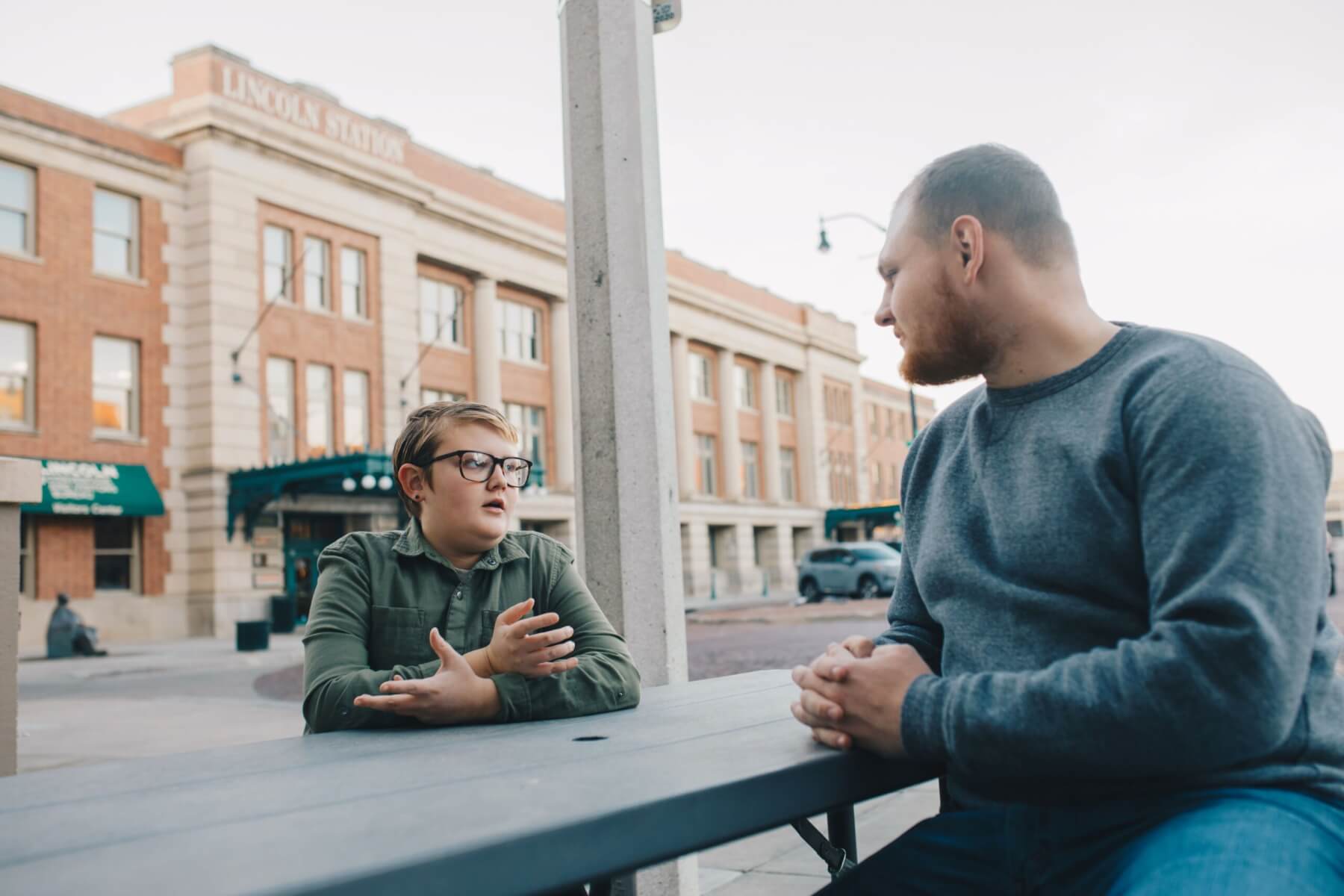

Summit Presenter Spotlight: Sara Wingerath-Schlanger
November 13, 2023
From January 24-26, 2024, the National Mentoring Summit will convene mentoring practitioners, researchers, philanthropic investors, youth leaders, government and civic leaders, and Affiliates from across the country to unite under the shared goal of driving positive change for young people.
In the months leading up to the Summit, we’ll be introducing you to some of the presenters who will be sharing their insights and expertise in dynamic, informative workshop sessions. To learn more or register for the Summit, click here!

Name: Sara Wingerath-Schlanger
Organization: Tuesday’s Children
Session: Exploring Lessons in Recovery and Resilience: Long-Term Youth Mentoring for Bereaved Youth
Sara Wingerath-Schlanger is the Senior Program Director at Tuesday’s Children, where she had previously served as the Director of Tuesday’s Children’s Youth Mentoring Program for children who lost a parent on 9/11. She has also served Executive Director of Special Ops Survivors, serving bereaved spouses of Special Operations heroes, and Program Director of ArtWorks, the Naomi Cohain Foundation, bringing innovative arts programming to medically complex youth in hospitals.
Sara began her career at Big Brother Big Sisters of Massachusetts Bay where she learned the power of matching agents of change with children through a strength-based model. Sara went to Hobart and William Smith Colleges for her undergraduate experience and holds a Master’s in Public Administration (MPA) from Suffolk University, with a concentration in nonprofit management.
Sara has presented at conferences on such topics as Trauma Responsive Mentoring, Leadership in Uncertain Times, and was part of a chosen group of mentoring leaders at the Summer Institute on Youth Mentoring at Portland State University. She has led the team through several Technical Assistance pro bono grants as selected by MENTOR, and has completed the National Quality Mentoring System evaluation which recognizes high-quality mentoring programs through a standardized process. Sara has been a guest at Capitol Hill to speak about supporting military-bereaved youth as well as being a spokesperson on the impact of mentoring. Sara lives in Snoqualmie, WA with her husband, two children, and rescue dog.
Could you introduce yourself and talk a little bit about your work?
My name is Sara Wingerath-Schlanger and I have been with Tuesday’s Children since 2006. I was formerly with Big Brothers Big Sisters, so I’ve really been in the mentoring space for most of my career.
Tuesday’s Children was founded after the September 11 attacks to serve the 3,051 children that lost parents on that day. As we built out long-term healing – which for us is about resiliency and filling in unique gaps that are being left by other organizations, since approximately 400 organizations were created after September 11 and very few are still in operation – we really wanted to ensure that we were offering resources for bereaved families and opportunities for post-traumatic growth and thriving. Then, about eight years ago, we opened our doors to the families of fallen military members. We offer long-term mentoring for kids aged 6-18 years old who have faced the loss of a parent or other significant adult figure and have a career mentoring program for young adults and adults.
I will also note that for years, we have offered a digital mentoring option. This existed before the pandemic and came about because we went from being an organization based primarily in the New York metro area to being a national organization that needed to connect our volunteer network with people around the country.
Your program has been around for 22 years, which means the many young people who were in the program at the start are adults now. Has there been longevity in terms of their connection with the program?
One of the most wonderful things about our program is the “circle of care.” Right now, we have a 9/11 surviving spouse supporting a Gold Star child. We have a 9/11 surviving sibling supporting a bereaved child. We have 9/11 children who were mentored themselves who are now mentoring Gold Star children. It’s this incredibly inspiring continuum of care. And these people are tremendous mentors because they’ve experienced this common loss.
There are certain people who gravitate to this work. They might have had some traumatic event in their life that brought them here. We also see a lot of people like Blue Star parents and people who really understand the sacrifices the military community is making. They seek out this opportunity because it gives them a chance to be a mentor within a community with which they have cultural competency, which is important and nuanced.
Could you talk a bit about the session you’ll be presenting at the Summit and how it relates to your work?
We really want our session to be all about how to support those who are also in this space. The cornerstone of what we’ll be talking about is how we can help mentors and mentoring programs build resiliency through mentoring. We want to help mentors and mentoring communities understand strength-based language and understand what’s really important to look for in a mentor specific to a bereaved child. We’ll also discuss important benchmarks that allow leaders to elevate a mentoring program’s ability to serve bereaved children. Every mentoring program has children who have been impacted by bereavement and loss; we just happen to be the program where that’s the common denominator.
I think we’re in a good place to lead this session because after 22 years of lessons learned, we’ve been able to serve in an advisement capacity for organizations building mentoring programs focused on things like mass violence and COVID bereavement. For example, after the 2012 shooting in Newtown, Connecticut, we received a call from a Newtown community member who wanted to replicate Tuesday’s Children’s model. We helped them establish a bricks-and-mortar presence, and they operated under our umbrella before becoming a standalone nonprofit, the Resiliency Center of Newtown. That’s just one example of how our leadership and guidance can help impact responsible positive change in different communities.
Have you attended the National Mentoring Summit before?
Yes. We’ve gotten several technical assistance (TA) grants through the National Mentoring Resource Center (NMRC), so it’s been really wonderful to come to the Summit and meet those people in person and to offer my thanks to the MENTOR Affiliate who has been the conduit to us and the TA provider. It’s also so valuable to meet like-minded peers. Sometimes in my work, I encounter people who are doing good work but don’t necessarily understand the many different facets that go into a more involved mentoring program. Meanwhile, at Summit we’ve got Becky Cooper helping us ensure we’re the safest program we can be, and Mike Garringer from MENTOR is explaining to us how we can ensure our program evaluation is the best it can be, and people who work in marketing and communications are talking about the incredible stories that come out of mentoring. There’s an understanding that you’re with people who know what they’re doing and know what they’re talking about, and as a result of that the things you learn can really take your program to the next level.
I always say to people, “If you run a mentoring program and you’re not at the National Mentoring Summit, what are you doing?” I tell funders all the time that I’ve been a participant, and it’s part of the onboarding for new staff. So to be a presenter this year and be recognized in that way is such a personal and professional accomplishment. I think I cried when I got the acceptance.
Is there anything else you’d like to share?
I’d definitely like to emphasize how much we have benefited from the TA work through the NMRC. We’ve talked with Mel English, MENTOR’s Director of NMRC Technical Assistance, about possibly becoming a TA provider at some point. I think one of the most important parts of this is learning from other TA providers and building every skill you can, and I think this is part of the journey toward that end goal.
Hear from Sara and more than 175 other session presenters at the National Mentoring Summit in Washington, D.C. in January. Register today!