
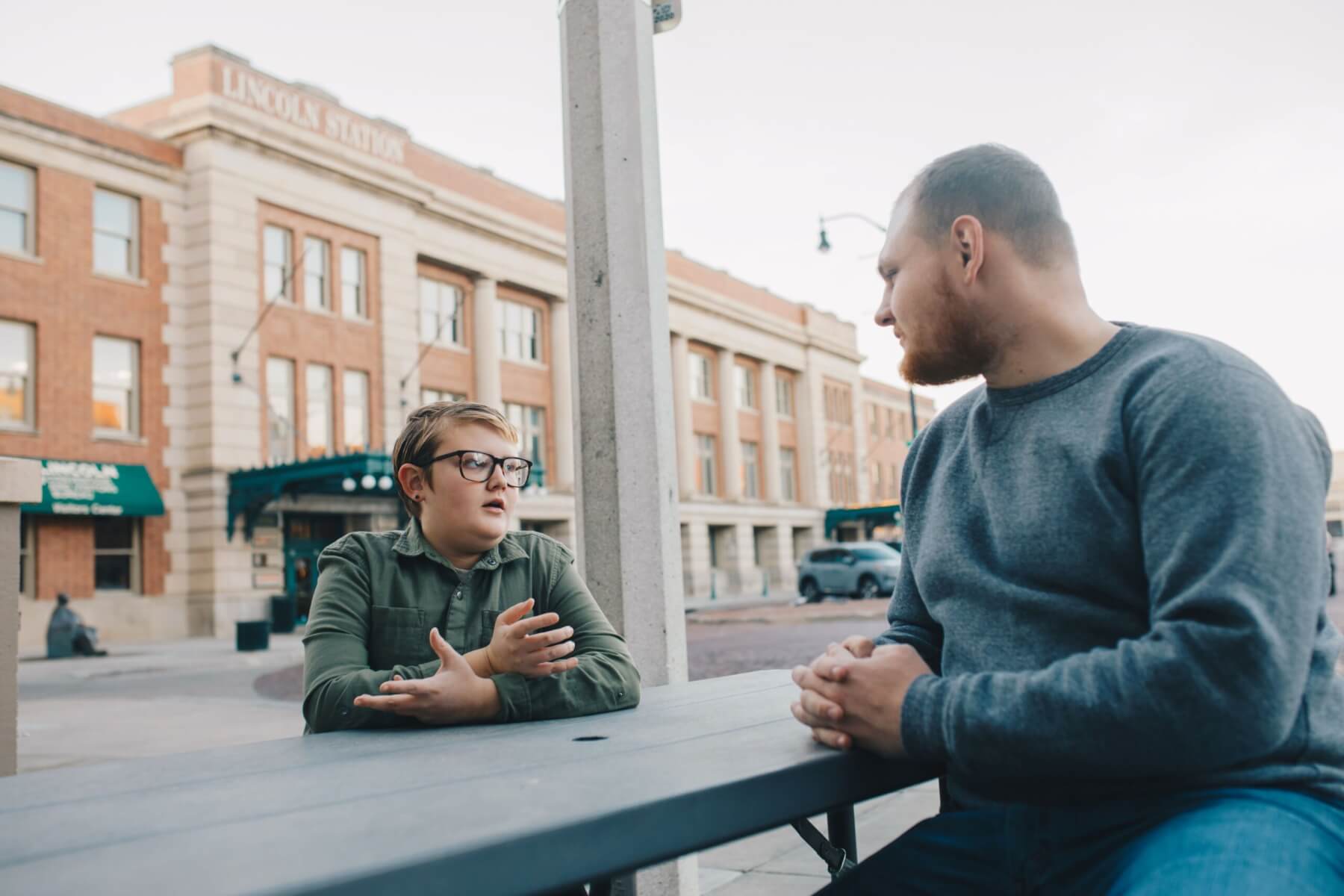

Summit Presenter Spotlight: Jamal Stroud
October 31, 2023
From January 24-26, 2024, the National Mentoring Summit will convene mentoring practitioners, researchers, philanthropic investors, youth leaders, government and civic leaders, and Affiliates from across the country to unite under the shared goal of driving positive change for young people.
In the months leading up to the Summit, we’ll be introducing you to some of the presenters who will be sharing their insights and expertise in dynamic, informative workshop sessions. To learn more or register for the Summit, click here!

Name: Jamal Stroud
Organization: Big Homie Lil Homie Mentoring
Session: Blurred Lines of Mentoring: The Wake-Up Call
Dr. Jamal Stroud is the founder of Big Homie Lil Homie Mentoring, a program that provides mentorship to young males who are growing up without father figures. On a national level, Jamal works as the Mentor and Outreach Manager for Camp HOPE America, offering technical assistance to 40 programs across the United States. He has been recognized both locally and nationally for impacting the lives of over 10,000 youth by providing them with support and positive male role models in South Carolina.
Jamal’s experience of growing up in the foster care system and living in six different homes by the age of six has made him passionate about improving and advocating for the welfare of young people. He has appeared as a guest on The Ellen Show and has received numerous awards, including the prestigious Jefferson Award, the Public Elevation Excellence in Mentoring Award from MENTOR, and the Daily Point of Light Award created by President George H.W. Bush.
Could you introduce yourself and talk a little bit about your work?
My name is Jamal Stroud and I’m from Columbia, South Carolina. I work in mentoring both locally and on a national level. Locally, I founded a 501(c)(3) mentoring program called Big Homie Lil Homie. We provide mentoring to youth who do not have certain opportunities within their communities and do not have a father figure in the home. Coming from a background like that was a driving force for me, so it’s been amazing to give back. These young people have so much potential and many great things that they may not be able to see in themselves.
On a national level, I work for Camp HOPE America, a national mentoring and camping organization for children who have been exposed to domestic violence. We operate in 24 states throughout the United States. It’s an amazing time to be on the national side creating policies, creating curriculums, and creating the next turn of events for our youth.
I see the work of mentoring not as a job, but as a lifestyle. I believe in investing in youth because someone gave me a shot and poured their time and energy into me. Creating that feeling and momentum for another young person is invaluable, and I think it’s so important to continue to move this movement forward and have more mentors coming up.
I wouldn’t trade this work for the world. Young people need us, and we need them as well.
Was mentoring important in your life when you were growing up?
I had mentors growing up, but at the time I didn’t know they were mentors. I just thought, “Hey, someone wants to play basketball with me or take me to the movies.” It felt like they were just another pal to hang out with. They poured so much into me and let me know that the world was much bigger than my city or my district or my school. They made me feel like I could do anything I put my mind to.
Fast forward to 2023, and I’m doing the same thing for young people that my mentors did for me. I always try to remember how important those adult figures were for me.
Could you talk about the session you’ll be presenting at Summit?
I will be co-presenting with my Chief Operating Officer, Adrian Peay. Our session is called “Blurred Lines of Mentoring: The Wake-Up Call,” which is sort of a play on words. I get a lot of inspiration from music, and I had been listening to the Robin Thicke and Pharrell song “Blurred Lines.” I wanted to come up with a topic no one was really thinking about that could push the envelope and really get people thinking. As I thought about my own experience, I was reflecting on how our mentees often may divulge something they want to be confidential, but we mentors have to report it because it’s a life-or-death or other serious situation. What’s the protocol for navigating that situation? You find yourself thinking, “This is a blurred line; how can I make the best of it?”
Our session will be a friendly conversation where we’ll dive in and talk about what’s happening within our communities, how we can serve them better, and how we can build rapport without knocking down rapport if we do have to make a mandated report or divulge something that was shared with us.
What inspired you to create this session?
This year has been a struggle for a lot of youth in our program. A lot of our kids have been having behavioral issues at school, but sometimes they’re just misunderstood. Sometimes they’re just angry or something happened in their life and they didn’t know how to cope with it correctly. They may divulge something to me and I’m thinking, “Is this something I need to tell their parent, or is this something that can be kept confidential?” The idea for the session grew from my thinking around that.
I’ve been there in the thick of it, so I’m looking forward to speaking from my own perspective. It’s one thing to come up with a presentation you can just read off some PowerPoint slides, but it is much more authentic to speak from a perspective of actually having been in it. As mentors, we’re not perfect, and I may not have always responded perfectly or said exactly what a young person needed to hear. I want to share examples from my own life that might mirror things other mentors have come in contact with. I want to be totally transparent. I’m really, really excited about this session.
You’ve attended the Summit both virtually and in person. What brings you back every year?
It’s so many different people from all over the country coming together to learn and inspire and grow. This year, I’m excited to be presenting, because I’ve had a journey getting here. In 2017, I thought, “I love mentoring; I want to submit a proposal.” That proposal wasn’t accepted. In 2018, I tried again; again, wasn’t accepted. 2019, tried again; once again, wasn’t accepted. Finally, in 2022, my proposal was accepted. It was incredibly exciting.
Just being around your peers who love mentoring and love working with youth is amazing. Sometimes, going to a conference just feels like going through the motions, but Summit is so inspiring. In a way, it refills your cup. You can get burned out in this work, but coming to Summit it feels like coming back to your center. It’s a great time to learn what’s going on in the field, connect with other programs, and hear about new ideas and trends. It’s a highlight of my year – I always have it circled on my calendar. My co-presenter couldn’t come last year because of work, and I told him, “You have to be there this year.”
As an experienced Summit attendee who’s coming with a first-timer, what advice would you give to people who will be attending for the first time?
I’d say be open-minded and be ready to learn and grow. Bring a notepad because there’s going to be such a wealth of information. And if you have a team, bring more than one person because there will be so many different sessions going on and you’re going to want to learn from them all. Make sure your team divides and conquers so you can come back together to share what you learned.
What do you think are the biggest takeaways from Summit?
Connections and collaboration are everything. I’ve made long-lasting friendships through the Summit. For example, at last year’s Capitol Hill Day, I got to meet a lot of people from South Carolina and am still working with them today. It was an important opportunity to bridge the gap within my state and work with programs that I didn’t even know existed. I also enjoyed the mixer before Summit officially started. That was a great time to connect and mingle, share business cards, and follow each other on social media in a more relaxed setting.
The real meat of Summit is going to sessions, learning, and connecting: getting presenters’ email addresses, getting the slide decks after, and going through those and implementing the learnings from those sessions. All of this has really enhanced our mentoring program.
As a former Excellence in Mentoring Award winner, what was your reaction when you got the award?
It was a total surprise when I learned I’d won. I’d attended the Summit and had seen the award being presented, and I remember thinking, “Wow, I wonder if I’ll ever get something like that.” I never thought in my wildest dreams it would really happen.
It’s truly a highlight for me to be there amongst some of the greats, but I never take it for granted because there are so many other programs that are doing excellent work as well. I’m just grateful that someone shined a light on my program and the work we’re doing here in Columbia, SC. It’s one of the first things I tell people when I meet them. I put it in my email and my LinkedIn bio, and I frequently share my video from the year I won to show the importance that youth mentoring has. I’m so grateful to MENTOR for honoring me, and I’m now in the process of nominating someone for next year’s award.
Is there anything else you’d like to share?
After attending Summit and receiving the Excellence in Mentoring Award, I had the opportunity to be a part of a group that developed the Philanthropic Agenda, which MENTOR launched earlier this year. Thirteen other mentoring practitioners and I worked together to develop a sort of “study guide” on how to raise awareness and funds for community-based mentoring programs. It was a really insightful process because it’s one thing to be in the work, but it’s another to look at the data and numbers around mentoring. Being part of this process let me see mentoring from a different lens and let me see the innovative things that people around the country are doing.
The group of us who developed the Philanthropic Agenda still keep in touch. We hold each other accountable for things, and we’re all planning to get dinner together when we’re at Summit. Some of them are going to be presenting workshops at the same time I am, so I’m hoping to send people from my team to their sessions and hear what they take away.
If I had never attended the Summit or received the Excellence in Mentoring Award, none of this would have ever happened. I’m grateful to be part of a great network and to have the chance to attend Summit and come away with tools and skills I can use it year-round to further my mentoring experience and continue improving things within my organization.
Hear from Jamal and more than 175 other session presenters at the National Mentoring Summit in Washington, D.C. in January. Register today!