

Mentoring and the Foster Care System: Alyssa’s Story
May 22, 2023
Alyssa S. entered the foster care system at the age of 13. Now a young adult in her 20s, she shares the story of how mentors helped her navigate the system and how she and her mentors have become family to one another.
Could you introduce yourself?
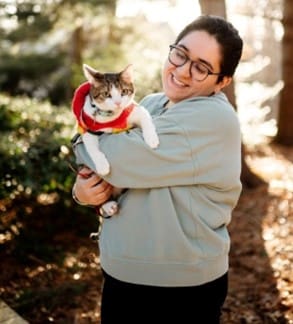
My name is Alyssa (she/they). I love to craft, crochet, paint, and do anything creative.
I went into the foster care system when I was 13. In foster care, once you turn 18, you’re able to sign yourself in to receive aftercare services until you’re 22. I did that and that meant I was able to stay in my group home setting and continue to receive support services. While I was in the foster care system, I began working with a couple of mentors.
How did you begin working with those mentors?
I’ll start by talking about Kristin, whom I call my “primary mentor.” She’s really more like family to me. We met when I was living in a residential home setting when I was around 13, soon after I started care with DCF. I had begun advocating for myself and saying, “I want a more structured relationship with an adult.” Kristin worked in fundraising, but she wanted to be more connected with the youth she was helping, so we were paired. While we were paired together, I started sharing my goals with her –for example, I wanted to graduate from a public high school, because when you’re in a residential setting you just go to school where you live.
When I left that residential home, I lost contact with Kristin due to some of the boundaries in place about contact with young people. But when I turned 18, I reached my goal and graduated from public high school. Through Internet searching, I found Kristin and sent her a message saying, “I know you may not be allowed to respond, but I wanted to tell you, I reached my primary goal and graduated from a public high school! I want to thank you because every time I thought I couldn’t do it, I thought about the goals you helped me set and the messages you gave me.” She wrote back that we’d figure it out, and once we navigated that we were able to catch up and go out to dinner. She’s been in my life ever since, and she’s become more like family than “just” a mentor.
I also have another mentor, Sarah Evan, whom I met through Silver Lining Mentoring. I was living in a group home, and they were matched with me through one of the mandatory groups I was attending. Once I aged out of the program, they and I kept in touch.
What types of things did you do with your mentors and how did you cultivate those relationships?
A lot of it was support around navigating the foster care system and ensuring I had more than just my own voice to support me as I moved through that system. When you’re in foster care, you have something called foster care review. Every few months, your foster care worker and their supervisory team come review your care to ensure your needs are being met. I often had Kristin or Sarah Evan come to those meetings so I’d have another voice advocating for me. For me, having them there was a way to make sure I had more of a voice, and in addition to my team and the team above them, it was nice to have an “outsider” there to give another perspective on the situation.
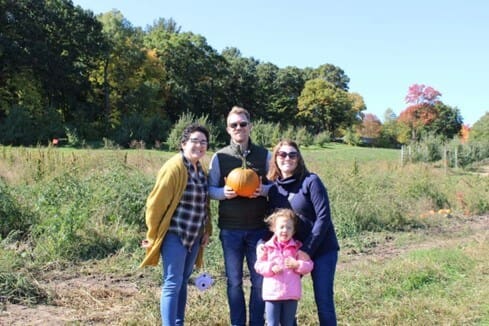
We’ve also always just found time to have happy moments together. For the past five years, Kristin and I have had a tradition where we go apple picking every fall, since that’s my favorite season. We’ll also do other fun fall activities, like pumpkin picking and hay rides, and will go ice skating in the winter. I really enjoy having someone to build tradition with.
Why do you feel like mentoring is important for young people in the foster care system?
When you’re in foster care, it can feel like people are only in your life if they’re paid or have some other role where they’re obligated to be there. They’re not always the most understanding or even necessarily in your corner; they’re just in your life because they have to be. Having mentors showed me that there are people on my side. They were in my corner, and even if they didn’t agree with me about something, they would support and listen to me and would give me advice and points of views that others wouldn’t. For me, mentorship was a guiding hope that there are good people out there who want to be in your life.
Were there any challenges when you started working with a mentor?
I think the hardest part was learning to trust them. You already feel like you’re in a rocky situation and then a person you don’t know shows up, and there are often boundaries and guided ways of how you can access them – like, “Okay, we meet on Tuesdays at this time.” At first, it’s very much a rigid thing that feels like a task. But once you open up and give them a chance, it becomes a fun thing that you look forward to.
A lot of young people talk about their mentors’ impact on their mental health. Do you feel like working with mentors has impacted that for you at all?
Kristin has really seen my entire mental health journey. She’s had to intervene on certain things and take me to the hospital, and she’s come to therapy with me and said things like, “This is what I’ve noticed about Alyssa that she doesn’t realize about herself.” And on a smaller scale, she’s someone I can go to and say, “Hey, I’m struggling. Can you help me find a new point of view?” When I come to her with a problem, she’ll say, “Do you need a listening ear or a fix-it?”
She tells me I’ve taught her things too. There are things as small as showing her how to put her phone on Do Not Disturb mode, and then larger things as well. The other day we were talking about emotions and she said, “Wow, this is helpful for me to know as I talk to my daughter.” It’s really great to know that I’m impacting her too.
If you were talking to someone who’s thinking of working with a mentor or mentee but is apprehensive or nervous, what would you tell them?
First, I would tell the mentor: you might feel this big responsibility to be there for someone, but sometimes showing up is the biggest thing you can do. Go into it with the mindset that you don’t have to move mountains – you just have to show up.
My advice for a potential mentee is to remember that it might take one or two mentors before you find the right fit. If you meet someone and it doesn’t work, don’t stop trying until you find one that clicks for you. Sometimes it’s just about the personality fit – even if someone seems like you’d be a great match on paper, maybe you won’t. And sometimes it just takes a few sessions or meetings before you find that one common ground that really kickstarts the rest of a great relationship.
Do you remember what the moment was for you and your mentors?
With Kristin, it was when we went bike riding. I wasn’t sure if I liked bike riding, and I think she was hesitant since she hadn’t ridden a bike, but she was ready to do an adventure with me. It felt like we were doing a hard thing together, and that opened me up to want to communicate and talk with her because I thought, “Oh, she’s down to do anything.”
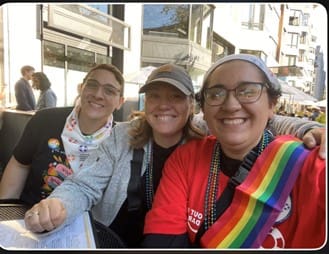
With Sarah Evan, I think it was having someone who was out, because I’m a member of the LGBTQ community as well. Having somebody who’s also in that community help me navigate how to tell parents and friends, and find therapists who were trained in working with LGBTQ people. I didn’t even know there were LGBTQ-specific therapists until I met them.
Why do you feel it’s important for young people who are LGBTQ to have mentors who are part of the community?
The world can be so cruel sometimes, and it matters to have somebody who’s a sounding board and who also understands in a way where you don’t have to spend your time explaining, because giving lessons sometimes takes away from the feelings you have. For example, if I went to someone and said, “I’m using they/them pronouns now,” if they responded, “Why?” it would feel like it were taking away my validation in a way. So having a mentor who’s in the same community is comforting and makes you feel like you’re not in it alone. Sometimes you do experience negative things, and it’s valuable to have someone who can say, “I understand,” instead of “Oh, I’m sorry.”
Is there anything else you’d like to share?
I think it’s important for mentors working with youth in the foster care system to know that for folks in the foster care system, it can be chaotic because we don’t have a say in our lives. Sometimes, a group home will close or they aren’t providing for someone’s needs, and it can be really tough to find stability. So finding that one person who is stable, who you can call or email, is so valuable. Life just impacts us differently, but showing up matters. Even if you can’t continue the relationship because you’re moving away or your life circumstances have changed, just communicate with your mentee.
I’d also like to share a resource from the American Foundation for Suicide Prevention, where I serve on a committee. They have a free mental health first aid training focused on student suicide prevention. I think it’s important for mentors to be trained on mental health issues, since nowadays it’s more common for people to have mental health struggles.
For the over 391,000 children and youth in the foster care system, having access to caring adults outside of the family is critical. Learn more about how you can meaningfully engage with and empower these young people.