
Learning more about the YMCA of the USA Youth Advocate Program
August 19, 2025
“The Youth Advocate Program has changed my life. I have never learned more in a shorter period of time. I made some of my best friends, and I became so much stronger in my advocacy skills. I employ what I learned every day in my work and school life. I am so incredibly grateful!”
– 2025 Youth Advocate
Can you give a brief overview of the Youth Advocate Program and how it works?

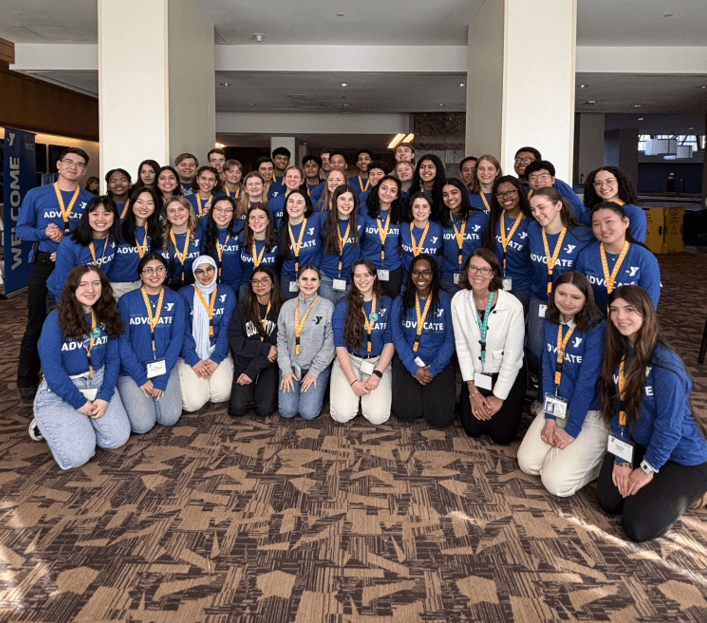
The YMCA is committed to nurturing the potential of every child and teen and champions youth voice by equipping young leaders with the skills and experiences to drive change in their communities and beyond. The Youth Advocate Program is a four-month civic engagement and advocacy training program that culminates in a trip to Washington, D.C. to share participants’ Y story with Members of Congress. Throughout the program, students attend trainings to learn about the history and mission of the Y, the Y’s legislative priorities, what effective advocacy looks like, and how to illustrate the impact of the Y by telling their Y story. Participants connect with peers from across the country and build valuable skills that not only improve their advocacy but build their confidence to be a leader in their community when they return home.
How are youth selected or recruited?
Now in its 12th year, the Youth Advocate Program has become a competitive program among Y teens. Y-connected youth all have important perspectives and ideas on strengthening their communities, so we advertise broadly among teen programs of all kinds. Applications are evaluated by several departments across Y-USA to make our selections.
What kind of training and opportunities for advocacy does the program provide?
Our trainings teach many advocacy tactics, especially the importance of building relationships. The program prepares students to engage in education and issue awareness, as well as connecting their personal Y story to a policy issue. Beyond the trainings, the primary opportunity to practice advocacy is by meeting with Members of Congress in Washington, D.C.. Students can continue to advocate beyond the program by connecting with their state alliance and tapping into future opportunities at the local and state level.
How do you empower youth to take control of their own advocacy?
The skills taught during the Youth Advocate Program can be taken back to their communities and taught to others in their program back home. By empowering students with lifelong skills in advocacy, public speaking, storytelling, and leadership, students are poised to advocate for issues they care about and encourage others to do the same. Some Youth Advocates have gone on to create youth advisory councils or youth seats on their local Y board, become the youth leader on their school boards, and more.
What advice would you give to organizations looking to start or expand their own youth advocacy programs?
Here are a few things we’ve learned along the way:
- Start small, go slow and build buy-in. We started the Youth Advocate Program with 20 students and created opportunities to showcase their enthusiasm and abilities (their public speaking, research and analytical skills). This helped establish buy-in from the Y Movement and the program quickly became a success and the high point of our annual national advocacy days event.
- Remove financial barriers to participate when possible. Youth have unique experiences and perspectives, and programs like this should consider how to ensure access for all youth.
- Select experienced youth development professionals to support students throughout the program. Staff chaperones deliver program content, help ensure students feel supported and have a positive experience, and set the tone of the program. Staff chaperones who are dedicated to the success of the program make all the difference!
- Make sure that child safety is a top priority. From background checks to room checks, having clear processes and procedures in place from the start will help all children remain safe in your program. And be sure to convey this information to parents, students, and event attendees.
“My experience in the Youth Advocate Program was fantastic. The Youth Advocate Program taught me how to communicate effectively, advocate professionally, and learn more about how my YMCA impacts my community and the importance of funding from my government. I was able to learn more about the leaders who help create the environment my YMCA provided for me. In addition, I was able to communicate with other YMCA advocates to learn the impact their YMCA has on them. This program opened my eyes to how advocacy can truly create a positive change for myself and my community.”
– 2025 Youth Advocate