
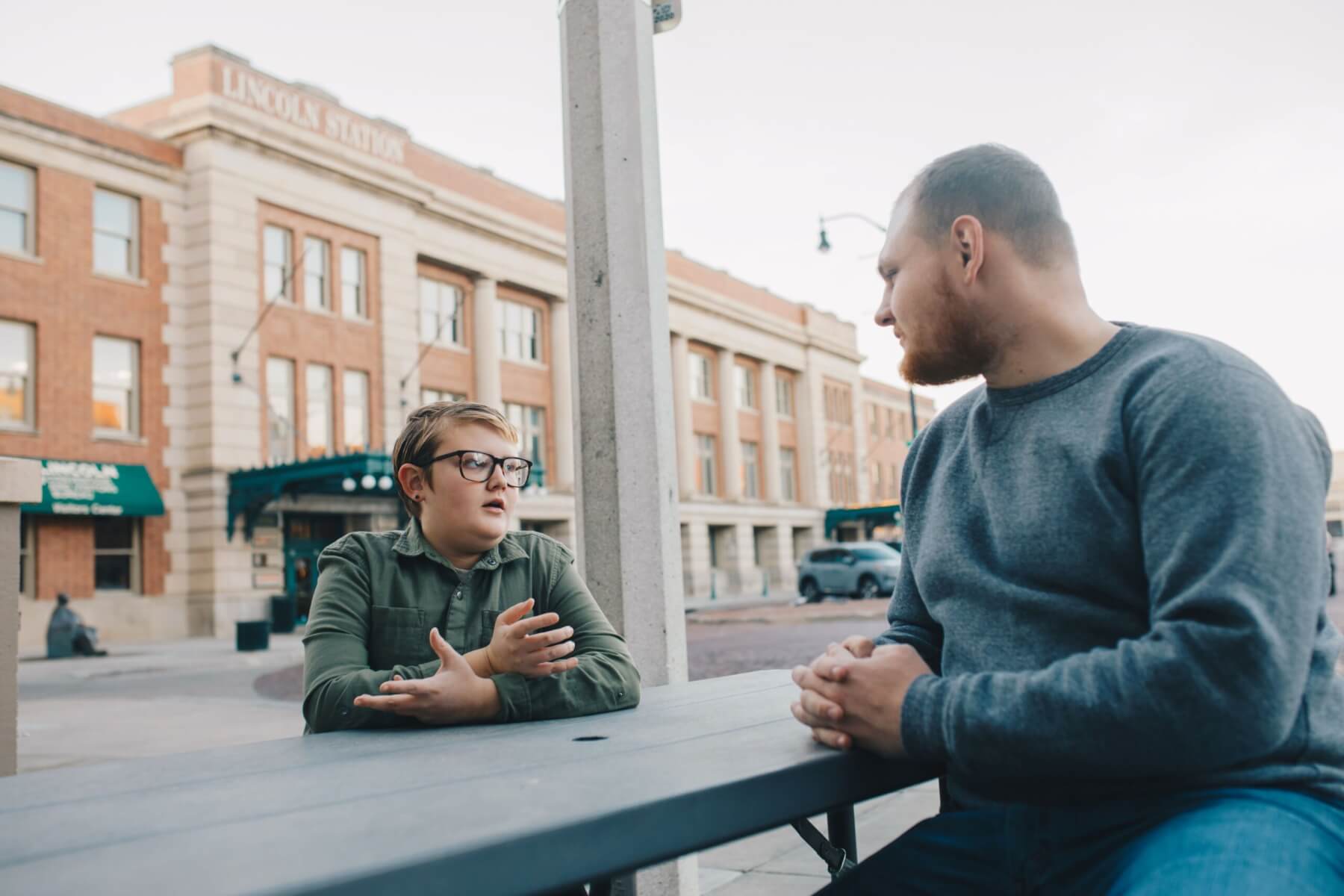

Summit Presenter Spotlight: David Ulloa
October 16, 2023
From January 24 – 26, 2024, the National Mentoring Summit will convene mentoring practitioners, researchers, philanthropic investors, youth leaders, government and civic leaders, and Affiliates from across the country to unite under the shared goal of driving positive change for young people.
In the months leading up to the Summit, we’ll be introducing you to some of the presenters who will be sharing their insights and expertise in dynamic, informative workshop sessions. To learn more or register for the Summit, click here!
Name: David Ulloa
Organization: City of Alexandria, VA
Session: Creating a Mentoring City

Meet David Ulloa, a proud Afro-Latino hailing from Miami, FL, now making a difference in the DMV area. He graduated from Florida Atlantic University with a Bachelor of Arts Degree in Criminal Justice and a Minor in Sociology. Continuing his educational journey, he earned a Master of Science in Clinical Mental Health Counseling from Nova Southeastern University, focusing on integrating trauma-informed care and mental health awareness into mentor relationships.
In the City of Alexandria, David currently serves as the Nation’s only Municipal Mentoring Coordinator, enhancing the intake process, liaising with courts, engaging families, and involving the community to recruit more mentors for local programs. David is dedicated to bridging the mentoring gap and is committed to ensuring that those seeking mentorship or aiming to guide others find the necessary support and encouragement on their journey.
Could you talk a little bit about yourself and your work?
My name is David Ulloa and I’m the Mentoring Coordinator for the City of Alexandria, Virginia. I oversee the Alexandria Mentoring Partnership, which currently includes over a dozen mentoring programs and “mentoring-affiliated programs,” which are out-of-school-time programs that do mentoring work in some capacity.
We are the only municipality in the country that has a full-time position dedicated to mentoring and mentoring initiatives. A position like mine is normally seen in school districts or in some capacity otherwise associated with schools, but it is our city’s overarching belief that mentoring is a big part of success in young people. Evidence shows it reduces recidivism and adds to success down the line. We have coined ourselves the “caring adult capital of the world,” because we believe that folks in our city care deeply not just about the city itself, but also about the young people in it.
Have you attended the National Mentoring Summit before?
My first Summit was three years ago, and even though it was fully virtual due to the COVID-19 pandemic, I loved it. I remember thinking, “Oh my gosh, there are so many other people like me!” I had never realized there was a whole conference just dedicated to mentoring and all its different facets. After attending that first year, I knew I wanted to present one day, and I’m very excited that this year I’ll be presenting a session called “Creating a Mentoring City.”
What is your session about?
When planning my proposal submission, I knew I wanted to be very intentional about the topic. As I began researching, I realized no other cities in the United States have a full-time mentoring coordinator and that many cities do not invest in mentoring in the same way that Alexandria does. As I continued researching and talking to affiliate networks, and one thing I heard frequently was that geographic reach can be a major issue. If a mentoring network is headquartered in one part of a large state, for example, cities and towns that are further away from those headquarters may not be able to partake in as many of the events and resources that network offers. So I thought, “If mentoring networks can’t fully serve every market, it should be a city or a county or a town’s responsibility to step up and say, ‘Hey, we care about our young people.’” I decided to develop a presentation on how government can have a positive effect on mentoring and can be a catalyst for change.
My session will, in part, give people a framework of how to approach their city council (or equivalent) to get mentoring on their radar and illustrate why it’s important for municipalities to devote resources to it. It’s mindboggling how many doors open when you have the involvement of your city or town – the magnitude of things you can get done and the access you have is incredible. Technically, I’m a team of one, since I’m the only person running the Mentoring Partnership. But because I work for a city, I’m able to use city resources and the expertise of other city employees. It means we have the print shop doing designs for us, the office of communications and community engagement doing promotional work for us, the transit department spreading the word on buses…as one person, I’m still able to leverage these resources and connect to all these different webs throughout the city to get information about programs out there.
My co-presenter, Maddie Nance, is a program manager from Space Of Her Own. Their program is 20 years old and predates the Mentoring Partnership, so she’ll be able to share what the mentoring landscape in Alexandria was like before the partnership existed and how it’s evolved. I hope programs in the audience will be able to benefit from her insight.
So let’s say someone is working in a municipality where there isn’t as much buy-in or infrastructure supporting mentoring. How can that person begin to develop support for mentoring?
One thing I’ll discuss is how to assess where exactly mentoring fits in currently and where it would make sense to integrate it. I tell people all the time, figure out where you fit in and determine who can be your champion – be it a school district, a business, or an existing program. Think about who the “big hitters” in your city are. Maybe it’s the city itself, but maybe it’s an organization within the city that a lot of people know about.
A large part of my role involves going to different businesses and corporations to encourage their employees to become mentors. How do you tell a company that mentoring makes sense and that they should partner with you? For businesses, we point out, “This is your future hiring pool. Your employee is out there representing the company, and now this young person who’s never thought about a career at your company looks at his mentor and has aspirations to work for you.”
I can’t stress enough the importance of building relationships and working with others. Here in Alexandria, we’re in what’s called the DMV area, which means we’re central to both Maryland and Washington, DC. Being at the geographic intersection of all these places means we’re able to bring together many different people and programs. We get to work with two MENTOR Affiliates – MENTOR Virginia and MENTOR MD | DC – and with great organizations throughout the area. While my primary focus is the City of Alexandria, having relationships with other counties and cities is so beneficial and essential. Someone might come to me and say, “I work in Alexandria but I live in DC – are there any programs closer to me?” and I’ll be able to connect them with one of our partners in DC.
My personal belief is that mentoring is just a fundamental right. Everyone deserves to have a mentor. Even if you’re not mentoring in our city, someone will benefit from your mentorship.
Is there anything else you’d like to share?
I’m very excited that during the session, I’ll be demonstrating a new resource we’re releasing called Mentor University. We secured a grant to develop this resource after hearing from programs in our network that they wanted more training opportunities for mentors. Mentor University is a hybrid of online and in-person trainings that are evidence-based and focus on mentoring techniques and skills like healthy communication, conflict resolution, and social-emotional learning. This will be an especially amazing resource for smaller organizations that have one or two staff members and may not have the bandwidth to do their own trainings, but who still want to ensure their mentors have appropriate training and skills.
Hear from David and more than 175 other session presenters at the National Mentoring Summit in Washington, D.C. in January. Register today!