

Intersectional Identities
August 31, 2022
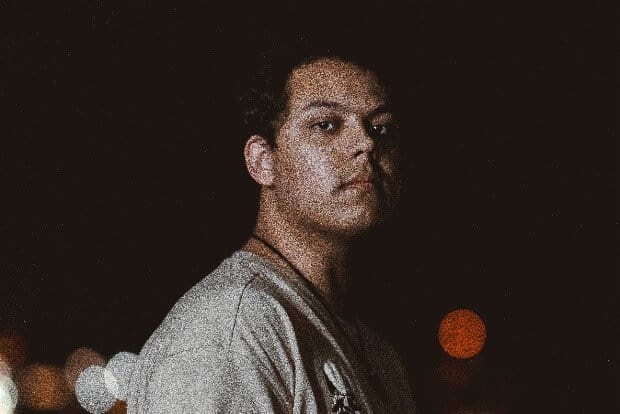
Andre Weiss is a Boston-based artist and rising sophomore at Boston University studying mathematics and psychology. He sat down with us to share his perspectives on mentorship, identity, and pursuing his passions.
Could you tell me a little bit about yourself?
I am a rising sophomore at Boston University and am double majoring in math and psychology on a pre-med track. While my academic interests are important to me, I also have a diverse blend of passions outside of that. I’ll walk you through all the sides of my identity that make me who I am.
My academic interests have evolved over the years. Math was one of my weakest and least favorite subjects until I began taking Advanced Placement Calculus in high school. It just clicked for me, and once I tested the waters of multivariable calculus I knew I wanted to major in math. I began taking psychology as a junior in high school, and I had the chance to intern at MIT in a developmental psychology lab. Since arriving at BU I’ve taken developmental psychology courses and have become even more interested in that field. I’ve also been able to explore my interest in medicine: I’ve interned at Boston Children’s Hospital over the past few years, and I’ll return this year to do stem cell research.
How have mentors played a role in your academic and career interests?
Many of my academic achievements and interests wouldn’t have happened without support from my teachers, especially my AP Calculus teacher. I was able to sit down with her this year and talk about majoring in math. I saw her having this, “Yes!” moment that felt like an extra bit of encouragement. I could tell she was really proud of my progress and the fact that she had helped to guide me.
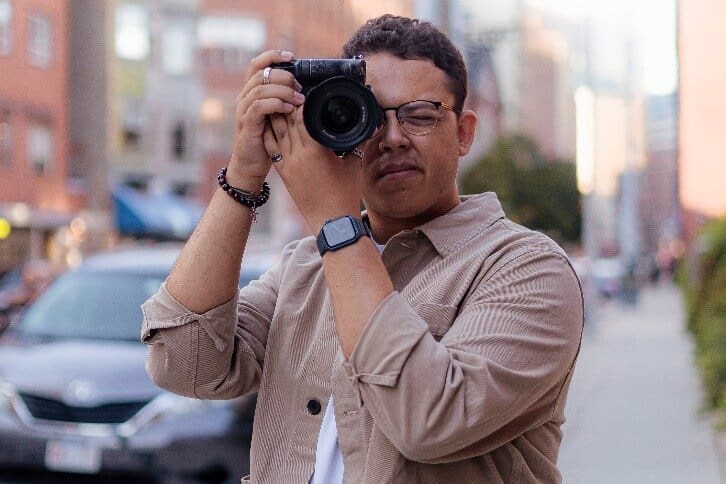
The next side of me that comes in is art. I’ve been doing photography for four years. It started off pretty simply – I got my first camera from a summer internship, and after that I saved up to buy another camera and blossomed from there. I started out learning on my own, but then discovered the programs at the Institute of Contemporary Art (ICA). I now work at the Art Lab studio space there, where people can come do art projects in varying mediums.
I’ve been fortunate to have a wonderful mentor at the ICA: Betsy Gibbons, who runs the teen programs. She’s supported me as I think about planning my own exhibition and has been an art world constant for me. She’s really helped me develop my passion for art, and once I got involved with the ICA, a whole world of opportunities opened up for me. For example, I worked with Converse on a project where I documented Abel Teclemarium, a Cambridge-based creative who made jerseys for the NBA All-Star Game. When the ICA had its Virgil Abloh exhibit, a Boston-based artist named OJ Slaughter recreated portraits of ICA teens in Abloh’s style, and I was one of the teens included in the exhibit.
Can you tell me a little more about your community work? How has mentorship played a role?
Community engagement is a huge part of who I am. I think the start of the COVID-19 pandemic was the crux for a lot of people getting into community work because they saw how damaged our world is, and they wanted to be part of the change.
I started working with a community organization called Teen Empowerment. I began working on a production team with other youth, but eventually became an Associate Program Coordinator. In that role, I was able to help grow the group, produce budgets and events, and create a movie called Senseless Smoke. During that time, I also got involved with a Mass Mentoring Partnership (MMP) program and served as a member of their Youth Leadership Council.
The time I spent in the MMP program led me to further career opportunities. The leader of my program nominated me to speak an event with Boston City Councilor Julia Mejia. I got to know the Councilor and volunteered with her reelection campaign. In addition, when I spoke at that event, I met the director of an organization called One Bead, which works with local schools to teach students in grades 1-8 different aspects of community engagement. Students select an issue in their community and create a pitch with their idea of how to fix that issue, and the organization they select to work on that issue receives a financial donation. I spoke to students in the program as a leader and role model of color, and I eventually became an intern at One Bead. That experience made me realize I wanted to work with kids in the future.
I’ve also been able to integrate my academic interests into my community work. I participated in a community advocacy program that focused on getting legislation signed to improve healthcare for kids.
What was your first experience with mentorship?
Ms. Clougherty, the head of guidance at Boston Latin School, is the first person that comes to mind. Throughout my high school career, she was the one person I could always go to for anything, and I still reach out to her sometimes. She’s done so much for me in terms of academic and emotional support, and she even wrote my college recommendation letter. She’s always been there cheering me on, and she’s been a constant support as I’ve been growing.
Why do you think mentorship is important for queer youth? Youth of color?
The shooting that happened in Uvalde, Texas, in May made me think about this a lot. Most highly-publicized mass shootings have involved white perpetrators, and that one was a bit of an anomaly. As a member of the Latino community, seeing yourself represented in such a horrific situation on both sides – as both victim and perpetrator – is really complicated. I think about how hopefully mentorship can show people they’re better than this. I don’t know a lot about the shooter, but I wonder: if there had been an intervention at some point, if someone had shown him he was better than this, would he have been in a situation where he did this?
Last semester, in one of my psychology classes, I learned intervention really matters – especially at an early age – for everything from autism to development to attachment and temperament issues. Mentorship is a really key intervention because you have a person who’s tuned into all aspects of your life. A mentor can help a young person realize, “I have a support system and this person believes I can do better.” I think that matters so much for all young people, but especially those from certain groups.
How has peer mentorship played a role in your life?
In high school, I tutored other students in math. It helped to build my confidence and I appreciated being able to help other students. After that, once I started working at the ICA, I was really able to step up as a peer mentor. Since I have experience with photography, I’ve been helping others who are interested in photography and want to learn.
In addition, early in the pandemic, some friends started an initiative called A Helping Elbow, which had the goal of supporting community members in need by providing things like food kits, grocery delivery, and clothing. A key part of the initiative involved tutoring younger students when schools went virtual. I was able to work with students who needed support but whose families didn’t have the resources to pay for private tutoring.
Mentorship has a lot to do with community. When you mentor someone, you get to teach them and share some part of yourself with them. I’ve been fortunate to be able to do that in many ways.
How do you feel like mentorship can help young people interested in the arts? In academia?
First and foremost, I would say that if someone has interests in a number of different fields, they should go for an intersectional approach like I did! A lot of people get tunnel vision and feel pressured to choose just one set of interests, but a good mentor can help someone focus on all the possibilities out there and think about how to integrate all their different interests.
For example, a lot of people stigmatize art by saying it’s not a career path, it’s not serious, and you can’t make money doing it. While that isn’t true anyway, I think it’s important for artists to know you don’t just have to be an artist – you can do art while also focusing on other career interests and passions. My mentors have helped me think about what I really enjoy and what I’d like to continue in the future, and I’ve realized I can be an artist without necessarily pursuing a full-time career in that field.
I take pride in being so multifaceted. In addition to having diverse interests, I’m a queer mixed person of color of Colombian and Dutch ancestry, and I think those intersectionalities help define who I am.
If you could give one piece of advice to someone joining a mentoring program (either as a mentee or mentor or both) what would it be?
If you’re seeking a mentor, think about the people you trust who have been a constant in your life. Don’t just ask a random person because you think they have connections or prestige. Look for someone who can genuinely support you! Even a friend can be a mentor if you’re looking for support. Think about your comfort zone and who you’re comfortable reaching out to.