
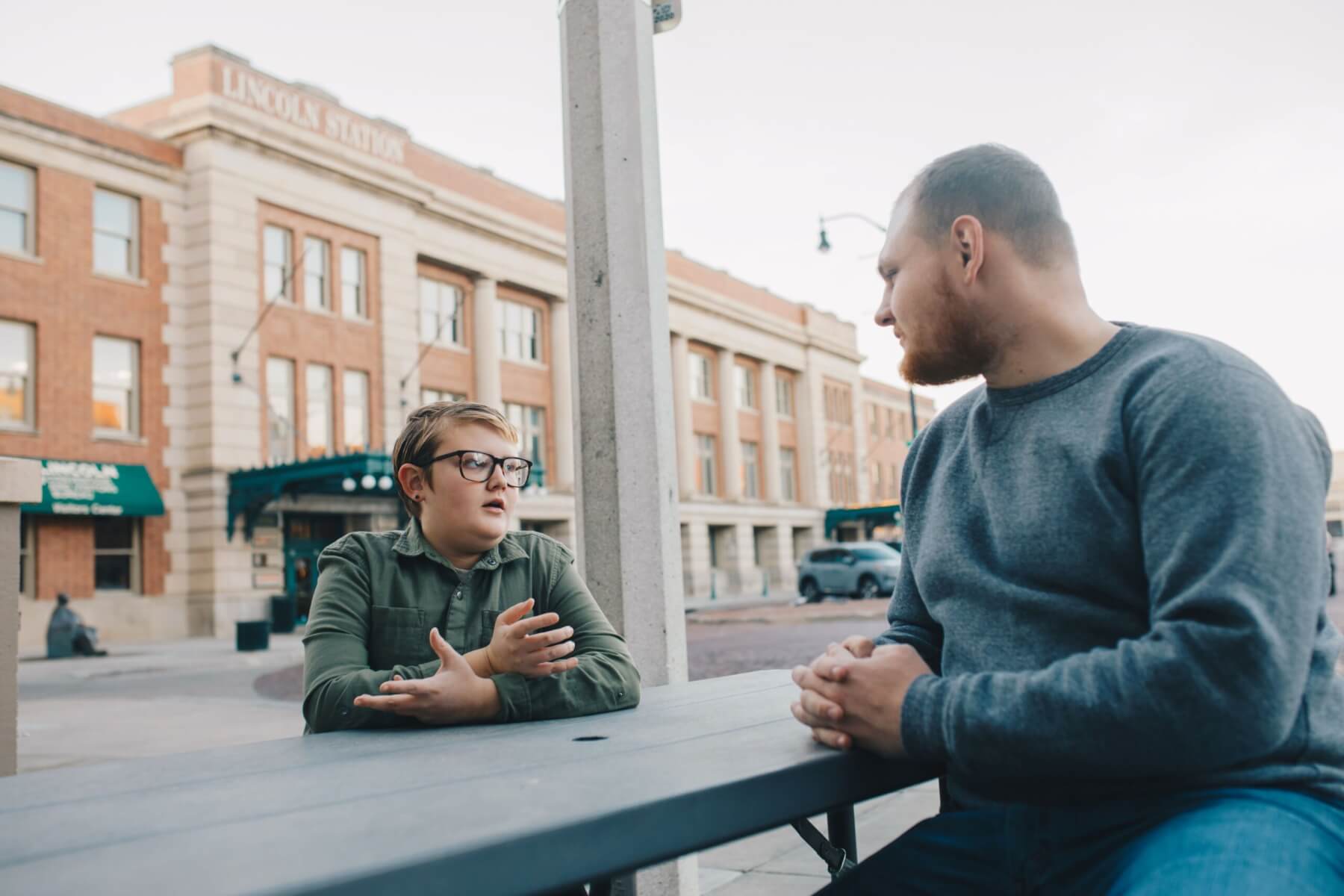

MENTOR & Tuesday’s Children’s Recommendations to the Biden Administration to Ensure the 140,000+ Children Who Lost a Caregiver to COVID-19 Receive the Care They Need
November 29, 2021
November 8, 2021 –
Dear Mr. President and Madam Vice President,
On behalf of MENTOR and Tuesday’s Children, we want to sincerely thank you for your leadership and your essential voice in raising awareness for families experiencing grief. We are reaching out to you at a pivotal time in our nation, a time when America’s families are facing greater bereavement needs than ever, and when the long-term impact of this tremendous loss is yet to be seen. As of this writing, more than 700,000 people in the U.S. have died from the coronavirus, and nationwide as many as 140,000 children under the age of 18 have lost a parent or primary or secondary caregiver.Your first-hand experience with grief gives you a unique lens, an inside perspective into what these families are facing day-to-day, and what may come for them in the future.
As our nation emerges resilient from the COVID-19 pandemic, and as society reopens and we begin to look to the future, it is essential that a safety net be in place to support all the children and families who have lost loved ones during this still ongoing global crisis.
Over the last two decades, Tuesday’s Children and MENTOR, the nation’s servant leader for the mentoring movement, have both directly connected and trained other organizations in matching grieving children across the U.S. with long-term mentors to ensure nurturing friendships and successful futures.
Tuesday’s Children provides a lifetime of healing for families who have been forever changed by terrorism, military conflict, or mass violence. In the aftermath of the terrorist attacks of Tuesday, September 11, 2001, Tuesday’s Children sent a strong message that the 3,051 children left without a parent belong to all of us. Tuesday’s Children has kept that promise and, in the two decades since 9/11, has served over 42,000 individuals through a proven range of resilience-building programs built around our evidence-based Long-Term Healing Model. We serve as a vital support system to thousands of Gold Star children of fallen U.S. military warriors, to global youth impacted by terrorism, and to communities seeking resilience after mass violence.
MENTOR has been the unifying servant leader for the evidence-based youth mentoring field nationally for over three decades. MENTOR’s mission is to fuel the quality and quantity of youth mentoring relationships through advocacy, development and delivery of standards, training, and research; and to expand awareness through our national network of state and local MENTOR Affiliates. MENTOR created and currently operates the Office of Juvenile Justice & Delinquency Prevention’s National Mentoring Resource Center (NMRC) since 2014. The NMRC improves the effectiveness of mentoring by supporting practitioners to more deeply incorporate evidence-based practices.
Tuesday’s Children and MENTOR have operated in close partnership over the last 20 years, both regionally and nationally. This partnership – and the partnerships we hold with other leading organizations serving young people – have allowed us to set the standard for promising practices in trauma-informed and grief-informed mentoring relationships for children, and in training for mentors and professionals. We have applied a trauma-informed lens to reduce isolation in youth through friendship-based connections with mentors using an approach that is proven to change lives and reduce risk factors for youth. Peer and community connections have demonstrated to be mitigating factors that promote positive wellbeing in youth and deter them from engaging in negative behavior and harmful social interactions. Throughout the pandemic, we partnered with leading experts and organizations to address isolation and other needs of young people and families facing trauma, grief, and instability through innovative virtual programs and e-Mentoring solutions.
Armed with five decades of collective experience supporting families, we can attest that mentoring can make a real and lasting difference in the lives of grieving children, and their families. Community support and peer friendships established through long-term mentoring relationships have measurable successful outcomes. However, our experience has also shown that federal government and private sector relief funds in the wake of local, national, and global-scale tragedies rarely cover long-term support and do not adequately provide professional training and capacity building for the service providers tasked with assisting grieving families.
Now, in the face of the greatest bereavement challenge our nation has faced since 9/11 and the War on Terror, even since World War II, we respectfully ask that you and your administration lend your voice to raise awareness for the needs of these tens of thousands of grieving children and hundreds of thousands of grieving families.
We have highlighted below some specific action steps your administration can take to help:
- Prioritize the immediate and long-term needs of children (and families) experiencing bereavement. Everyone metabolizes grief differently as individuals and families, however children process grief in varied ways over time as they transition through important developmental milestones.
- Ensure federal and state-level investments in mentoring programs, training initiatives, and frontline mentoring service providers. The recent federal budget request included an impressive $20 million increase in funding to the Office of Juvenile Justice and Delinquency Prevention (OJJDP), which funds mentoring initiatives, however the scope of these services can to be broader and more inclusive of all youth, not just those in or at-risk of becoming involved in the juvenile justice system, and other federal agencies can make similar investments in mentoring.
- Close the gap in professional training and capacity building to ensure that mentoring and other community services are bereavement-informed and trauma-informed. Not only is there a shortage of behavioral health professionals nationwide and in communities hardest hit by the pandemic, but frontline programs—such as nonprofits, youth-serving organizations, CBOs, schools, after-school initiatives, pediatric care clinics—lack the capacity to address the emerging and multidimensional needs of grieving families.
- Establish a public awareness campaign around family bereavement and mentoring, including calling on federal agencies, the private sector, and key industries to boost volunteer mentor recruitment. Mentor recruitment is the greatest challenge to matching youth with qualified and consistent adult role models. Just as vaccinations are the key to our nation’s health and prosperity as we emerge from this pandemic, mentoring is a highly effective formula for addressing widespread childhood bereavement, creating intergenerational friendships that emphasize common bonds, and ultimately securing the future of our country through a generation of resilient youth.
- Ensure that support for youth and families grieving the loss of a loved one are accessible and equitable. It is necessary to create networks for collaboration and wraparound services to meet basic needs (food/housing insecurity, financial hardship, transportation, child care) that may prevent families from accessing community support systems and mentoring programming. Virtual solutions, such as e-mentoring, can help bridge the digital divide and make programming accessible to families juggling busy schedules or living in remote locations.
Finally, as we emerge from this pandemic and celebrate our nation’s successes in bouncing back from one of the most challenging crises Americans have ever faced, and as you continue to fulfill your commitment to build back better and invest in our economy and infrastructure, we ask that grieving children and families not be forgotten. We ask that promising and innovative practices, based on our collective experience addressing the needs of children and families impacted by wide-scale tragedies be leveraged to inform response efforts for these newly bereaved families.
We are grateful to have an administration in place that understands that grief, like love, leaves a permanent mark, and recognizes the moral obligation of our country, and of our government, to honor the lives lost and walk beside those left behind.
We look forward to continuing this conversation and working together in service.
Best regards,
Terry Grace Sears
Executive Director
Tuesday’s Children
David Shapiro
President & CEO
MENTOR
Others joining MENTOR and Tuesday’s Children in co-signing this letter on childhood bereavement and
youth mentoring:
A WORLD FIT FOR KIDS!
America SCORES
America’s Promise Alliance
ASPIRA Association
Boys & Girls Clubs of America
Catholic Charities USA
The Center for Resilience LLC
Citizen Schools
Communities In Schools
Eluna
Encore.org
Friends of the Children
Girls Inc.
Give an Hour
iCouldBe
Johns Hopkins University
Marked by COVID
National Alliance for Children’s Grief
National Alliance of Faith and Justice
National Association of School Psychologists
National Recreation and Park Association
New York State Association for Infant Mental Health
Social Work Hospice and Palliative Care Network
Vibrant Emotional Health
Youth Collaboratory
YouthBuild USA
Grace Christ, PhD, Professor Emeritus, Columbia University School of Social Work; Author of Healing
Children’s Grief