

Youth Advocates Lead the Way to Powerful Policy; Here’s How Mentors Can Support Them.
December 28, 2020
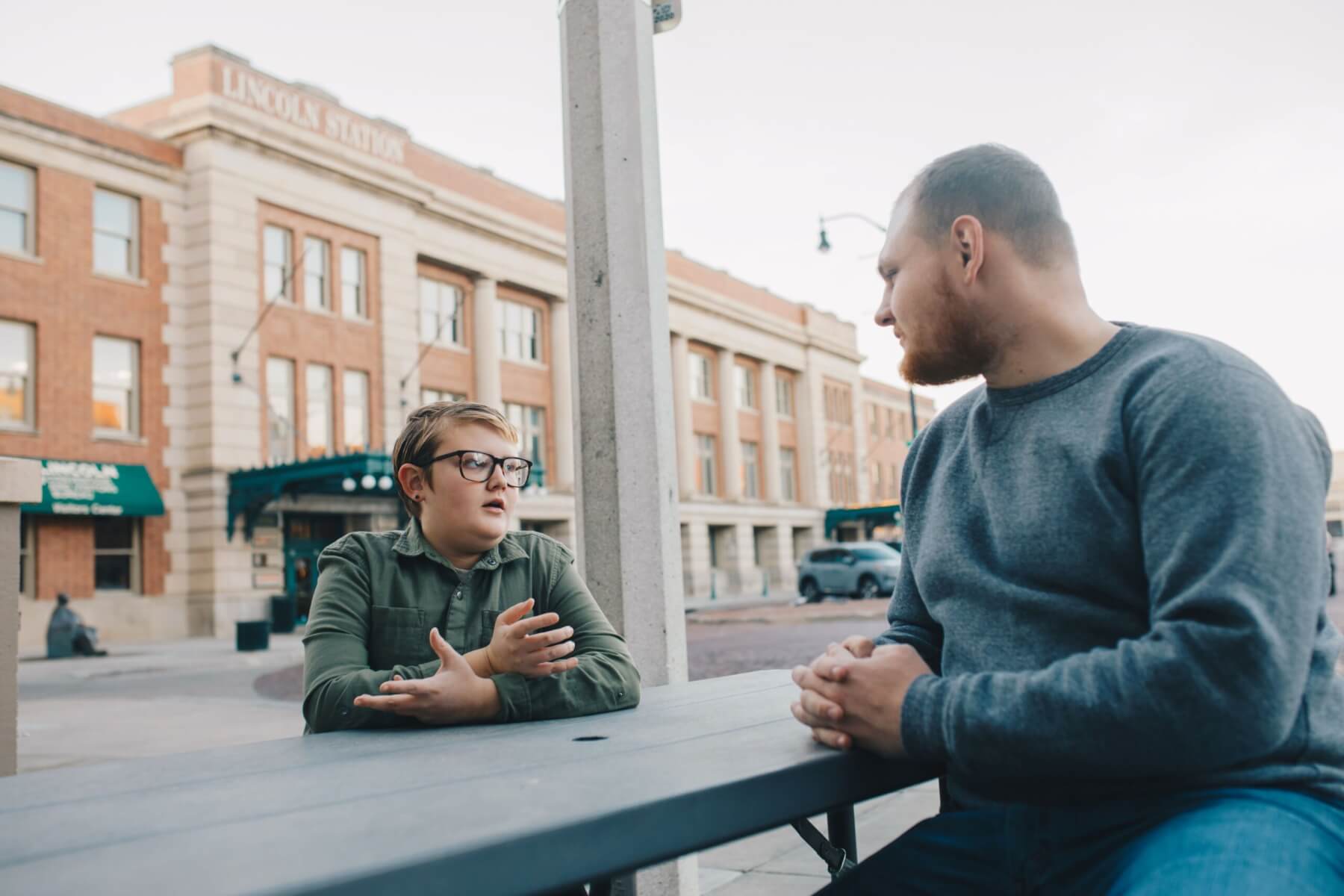
Across the country, young people are leading advocacy efforts on local and national levels. Their work has led to impactful conversations about what systemic and relationship equity can be. Adriane Alicea, Director of Advocacy at MENTOR, declares, “Young people should be at the center of policy and advocacy solutions.” Nearly every decision made by adults – within our government, communities, and homes – directly affects the young people living within those ecosystems. Therefore, it’s important that youth lift up their voices and exercise their power and leadership.
That said, how can mentors and mentoring programs support young people passionate about advocacy – and inspire that passion in others?
Under the leadership of Adriane Alicea, MENTOR hosted a National Youth-led Advocacy and Mentoring Town Hall to address this question with specific guidance from participants of MENTOR’s Youth Advocates for Mentoring program. Youth Advocates for Mentoring is a 10-month program that trains 12 young leaders on advocacy, policy, and grassroots organizing skills, so they have the tools and networks needed to implement positive change in their communities and the country. The national town hall featured questions generated by Youth Advocates, allowing them to have continued ownership over how they express their policy expertise and share their experiences. Youth Advocates are passionate about a diverse array of issues, including expanding access to quality mental health care for youth, creating networks of peer support for first-generation college students, and addressing the root causes of youth gun violence.
Leveraging Experience and Cultivating a Growth Mindset
During this town hall and the state-specific town halls that followed, Youth Advocates and MENTOR Affiliate leaders shared actionable steps that adult allies can take to support young people. Anabel, a Youth Advocate from Illinois, spoke to the importance of mentors having a growth mindset, “Mentors and programs can support us is by connecting us to others who have done something similar. That way, our ideas can continue to develop and become more well-rounded.” This sentiment was echoed by Virginian advocate, Taariq, “Being able to learn with you and not being the only one learning. What I would want from [a mentor] is to tell it like it is.” Mentoring relationships can be beneficial to both the mentee and the mentor. Mentors should practice humility to receive those benefits, even if they have many years of personal and professional experience. Adopting a growth mindset will enable them to co-create safe spaces for learning and curiosity.
As helpful as it is to know what effective mentoring looks like, it’s also essential for adults to identify ineffective mentoring practices. MENTOR California’s President and CEO, Marcus Strother, facilitated a conversation about what ineffective mentoring can look like to young people. “We’re still learning, but we’re capable,” Californian Youth Advocate Letty explained, “Don’t criticize us without giving feedback on how we can improve. How can you guide your mentee, instead of belittling your mentee?” Other unhelpful behaviors include having a defeatist attitude (e.g., “That’s not going to work.”) or being dismissive (e.g., “Your opinion doesn’t matter here.”). Grace, another Californian advocate, encouraged mentors to remember, “Everyone lives a different life. You’ve only lived your single life. Times are different. [If a young person proposes] an advocacy strategy that you think might not work, you don’t want to remove it completely. You want to talk about it and ask questions to help the youth think it through thoroughly.” Embarking on anything for the first time can come with a lot of excitement and some unknowns. It can be meaningful for mentors and mentoring programs to provide both tactical and emotional support that affirms the mentee’s experience not squashes it.
Translating Passion into Sustainable Action
In some communities across the country, youth-led advocacy is still blossoming. Mentors and mentoring programs can play a crucial role in helping mentees turn their passions into action. Mason, a Youth Advocate from Alabama, shared his experience: “When I was writing a policy brief, I was able to share research with my mentor. We helped each other out.” In addition to tactical support, practicing empathy can be just as meaningful. As part of the Kentucky Youth-Led Advocacy and Mentoring Town Hall, Kyndall shared how her mentor supported her during a stressful time, “I was so worried about everything, and it was affecting my physical health. She told me, ‘Kyndall, this is not the hardest thing that you’ve ever done in your life. You are entirely capable of doing this.’ And I remember, I sat there and I was like, ‘Wow, yeah, that’s exactly right.'”
Interconnected with conversations about youth-led advocacy are discussions about self-care. Sustainable movement-building requires us to engage in emotional, physical, and spiritual rest to avoid burnout. During the New York Youth-Led Advocacy and Mentoring Town Hall, MENTOR New York CEO Brenda Jimenez-Peralta and Youth Advocates Ivette and Roxy discussed living through these layered crises while in college. “I try to stay away from social media,” Roxy shared, “Watching all the videos of everything that’s going on has impacted my mental health, so I try to stay away from it. I’m learning how to play the violin. I do at-home workouts. It’s a little rough, but I’ve been trying to be consistent.” Ivette’s interests leave room for experimentation. “I’m trying to combine my passions and my hobbies. Seeing how the issues [I’m passionate about] can be voiced through different mediums to reach others. Not everyone receives the message the same way, so trying the best way to expand it so everyone can use all their senses and receive it, acknowledge it, and want to participate in it.”
For more suggestions, watch the town halls below and contact our Director of Advocacy Adriane Alicea at Aalicea@mentoring.org