
It Takes a Village: Building the Movement to Win for Young People
August 24, 2020
When I entered the classroom in 1998, I was full of ideas about the kind of teacher I would be; exciting, motivating, with an unorthodox approach. I considered the field trips I’d take my students on and dreamed about the brilliant conversations we’d have as we attempted to connect lessons on English Literature to their daily lives (yeah …). I imagined that all of these things would create the kind of well-rounded educational experience that would take my students far. And in so many ways these aspirations were realized.
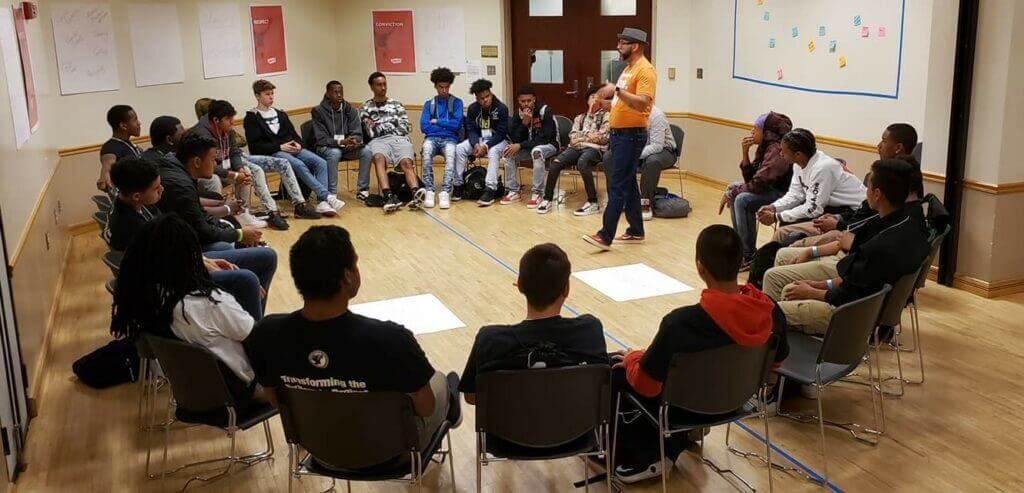
As well intended as I was, I soon realized that it would take much more than work in the classroom to support students. In fact, their lives outside the classroom would inform everything that our ‘village’ needed to be for young people — it was their #LifeData that mattered more. #Lifedatamatters means that I work with young people who have biographies. They are not data points. The biggest truth in what we do as mentors, educators or youth developers, comes from the human assessment testimony of our young people.
Yes, my students require all of the traditional support so many of our schools lack; adequate educational resources, sufficient counseling in our schools, or high-quality educators that understand our young people and our communities. Still, there was something more awry when it came to the factors impacting their #LifeData. My students lived in communities with poor access to healthy food and clean or safe parks, leaned on underfunded social services, struggled from chronic joblessness, and were impacted significantly by national policies that disproportionately broke up and locked up families of color. In short, there was not always a lot around them that offered much hope at all. My pure enthusiasm alone wasn’t going to be enough to change that.
During my time as an educator and school leader, I learned I would need to “campaign” for the tools and resources my students needed. That frequently meant, and oftentimes unpopularly, going outside of school structures to find allies, supporters, and the kinds of accomplices that understood their role in building more equitable spaces for our young people, in classrooms and in communities.
This is why I am so proud MENTOR has supported The Mentoring to Succeed Act in Congress. The bill mobilizes our resources by bringing together educators, community members, and employers to boost young people’s potential outcomes. The Mentoring to Succeed Act would marshal federal dollars to local school districts to develop the kind of centralized mentoring, extracurricular and career exploration that builds strong communities. Importantly, it’s designed to work in communities with varying challenges too. It includes funds for a trauma-informed approach to managing the violence crisis we face in large cities like Chicago and small ones like Flint, Michigan.
In reaching out beyond the classroom, I found that I was not the only person in our community that recognized the needs of young people. From the Public Library to local clergy to local businesses, everyone had a perspective and wanted to act.
Building a movement for equity in education has taught me a few valuable lessons. Below are a few of the guiding principles that have been fundamental in my work and to our movement:
- Build Your Squad — Who are the coalition of partners who are closest to the pain whose voices should lead the work. Who can have the most impact on those you need to influence? For me this meant partnering Erin Gruwell and the Freedom Writers Foundation when my students wanted their stories to be told. How do we do this in a way that will be relevant and powerful at the same time? Writing as a tool for addressing trauma and being the author of your own story has become so powerful in my work, it is one of the most asked for workshops that I do today.
- Identify Your Campaign Goals — Identify what can be accomplished. Developing several goals that build upon one another will energize you and your supporters and bring outsiders into the fold — everyone likes to win.
- Plan Your Campaign. Execute. Repeat. — Together build your strategy to accomplish your goals. Try, learn and repeat until it’s accomplished.Learning and iteration are all a part of the work when you are attempting to accomplish your goals. When my students decided that they wanted to go to the Dominican Republic to build a school, we had to strategize around board and school approval, parent approval, raising the funds and then executing the work. We were met with failures and accomplishments. Once we knew the strategy, we were able to continue the work in different ways, more than once. You have to execute. There are those that have big dreams and then there are those who accomplish big dreams. I teach young people to dream big and execute bigger.
While these lessons are just guiding principles for how we movement build for youth, one thing is clear — it takes a village. And it is going to take a village to pass legislation in Congress that creates more supports for young people. We must urge our friends and partners in the movement to call their members of Congress and tell them to join the village, they can start by passing more legislation that expands relationship-centric supports for youth.