


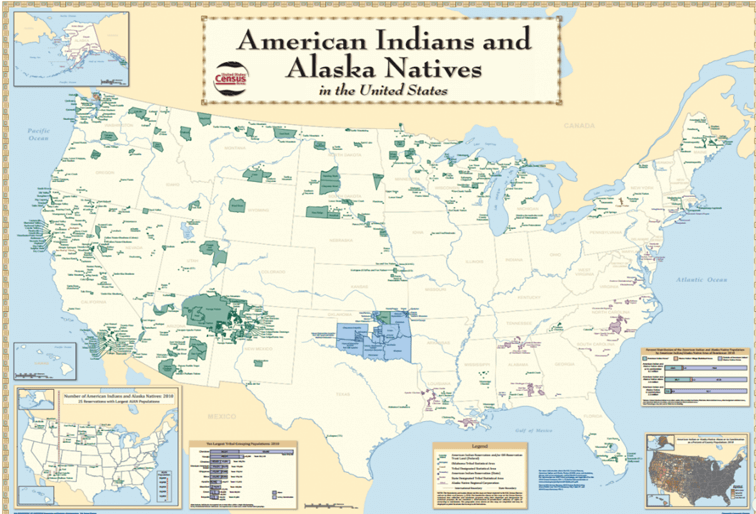
There are three types of sovereign governments in the United States: the federal government, state governments, and tribal governments.
- The federal government derives its power from the people—its voting citizens.
- State governments derive their sovereign power from the federal government.
- Tribal nations derive sovereignty from the people, the land, and their relationships; tribal sovereignty was not a gift from any external government.
- Although it is not defined by the Constitution, it is recognized by the Constitution.
Indian Nations exercise their inherent right to self-governance. Through tribes’ sovereignty, they interact independently in government-to-government relationships with other tribes, states, the federal government, and other countries’ governments. Additionally, tribes interact with school districts, cities, municipalities, businesses, nonprofits, nongovernmental organizations, higher education institutions, and more. Tribal sovereignty encompasses legal, cultural, political, historical, and contemporary traditions, which are connected to both European and Indigenous philosophies in complicated ways.

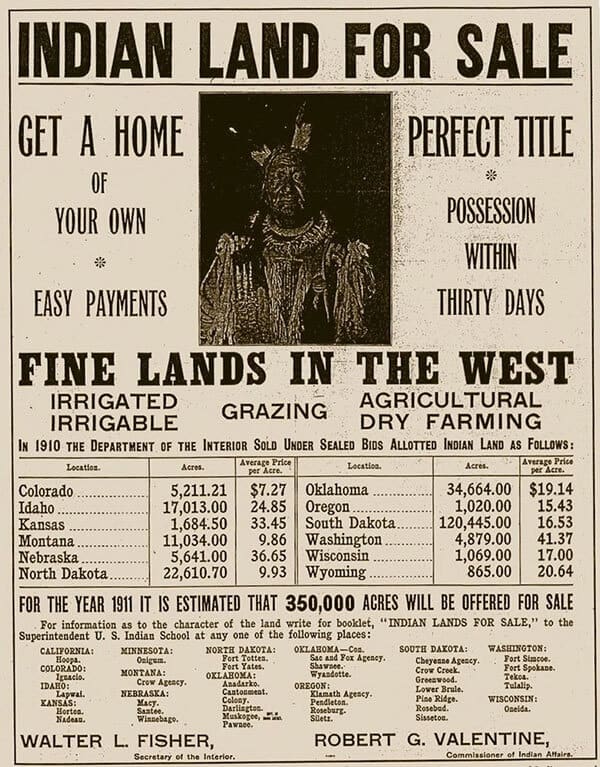 Advertisement for the sale of land to whites under the Dawes act of 1911. United States Department of the Interior [public domain] via Wikimedia Commons.